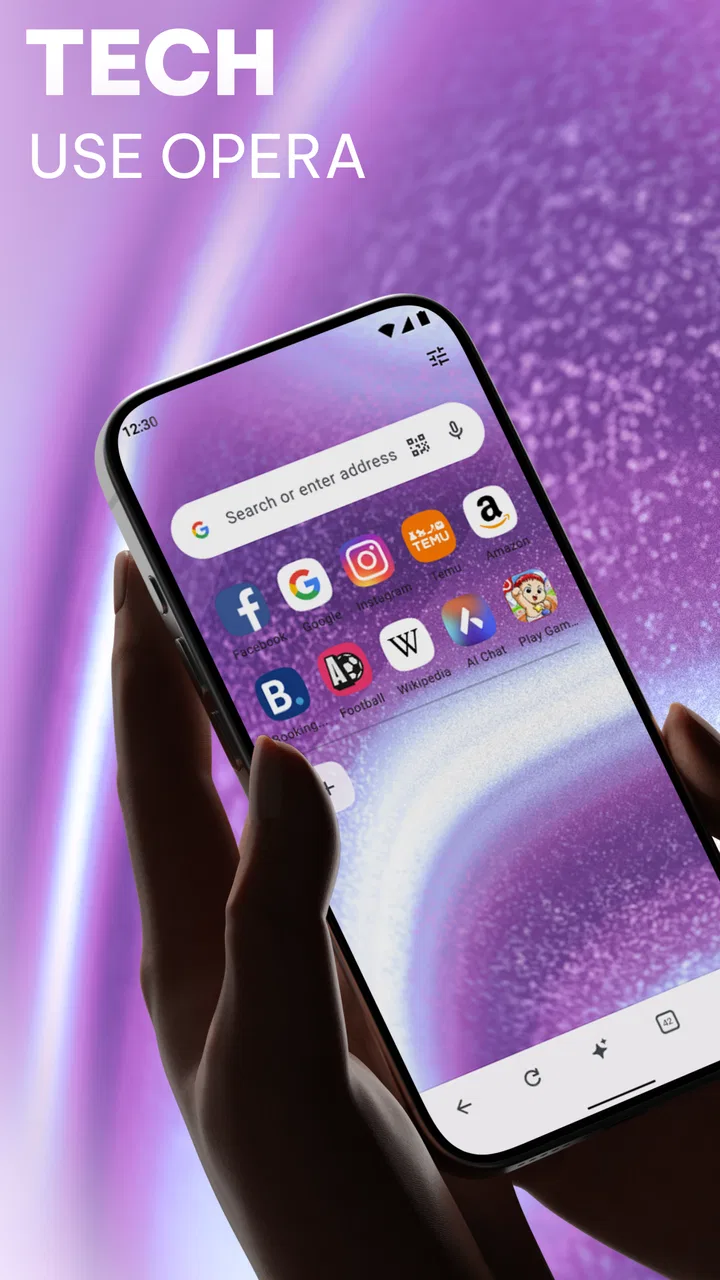
Opera: Private Web Browser
- 4.8
- Rating
- 500.00M
- Installs
- Free
- Price

 Analysis by App-foxy
Opera: Private Web Browser made a strong first impression when I used it as my everyday mobile browser. It opens the door to a familiar web experience, but it also tries to make browsing feel more controlled and less exposed. That combination matters because a browser is not an app I open only for entertainment; it handles searches, shopping, messages, forms, reading, and links from other apps. The real test, then, is not whether Opera feels interesting during the first few sessions. It is whether it remains comfortable after the novelty disappears.
My short answer is that it can earn a permanent place on an Android or iOS device, especially for people who want a free browser with privacy-minded tools and a different approach from the default option. It is developed by Opera, belongs to the communication category, and is available to everyone. The app has been around since Nov 8, 2010, which gives it a much longer history than a newly launched browser. That history is useful, but it also raises the standard: an established browser should be judged by daily reliability, not just by a list of extra functions.
What feels useful during the first week
The first-week appeal comes from how quickly Opera fits into ordinary browsing. I can use it for a quick search, open a link from a message, read an article, or move between several pages without having to learn a complicated system first. That low entry barrier is important for anyone switching from a default browser. I do not want to spend an afternoon understanding the basic navigation before I can simply look something up.
You May Also Like

 Blood Strike: 2.5 Anniversary
Blood Strike’s Loadouts Turn Every Drop Into a Tactical Gamble
A close look at Blood Strike’s custom loadouts: how fast access to signature weapons reshapes its battle royale rhythm, rewards preparation, and narrows the gap between fights.

 Pandora - Music & Podcasts
Pandora’s Music Is Easy to Start, but Harder to Recover
Pandora’s strength is its low-effort path from a seed to a station. Its weak spot is how much confidence it asks you to place in connection, setup, and quiet recovery.

 8 Ball Pool
 Is Built on Rivalries, Rematches, and Routine
A close look at the rivalries, rematches, shared routines, and unanswered safety questions that turn a quick pool match into a persistent mobile community.

 Samsung Music
’s Quiet Strength Is Playing What You Already Own
Its reach comes less from spectacle than from dependable access to a personal library. That simplicity is both the app’s strongest retention engine and its ceiling.

 AccuWeather: Weather Radar
AccuWeather Review: A Quick, Clear Forecast for Everyday Decisions
For everyday plans, the best forecast is the one you can understand quickly. AccuWeather makes rain timing, radar, and local conditions easy to act on, with a few trade-offs.

 Hill Climb Racing
Why Hill Climb Racing Still Turns Crashes Into One More Run
A tiny car, a bumpy hill and one more upgrade: Hill Climb Racing keeps resurfacing because its simple chaos makes every near-miss feel personal.
More From Our News Desk
View All News


The privacy focus also changes how I think about the browser. Opera presents itself as more than a page-loading tool, and its emphasis on keeping browsing safer gives the app a clear identity. I would not treat that promise as a reason to become careless online, but it is a useful reminder to pay attention to tracking, permissions, suspicious pages, and the information I share. A browser can reduce some exposure, yet it cannot make every website trustworthy or replace sensible account security.
One practical advantage is that a browser like this can serve as a deliberate alternative to the browser already installed on the phone. That separation is handy when I want a different browsing environment for research, shopping, or personal reading. For example, I might keep work-related pages in one browser and use Opera for general searches and articles. This is not a dramatic feature, but it creates a simple boundary that can make a crowded phone feel more organized.
Opera has earned an average rating of 4.8 from around 5.3 million ratings, while its reach extends beyond 100 million installs. Those figures suggest that the app has found a broad audience rather than relying only on a small group of enthusiasts. I still would not choose an app solely because many people use it. What matters to me is whether the browser behaves predictably on my own device, with my preferred websites, network conditions, and habits.
The current version is 95.3.4982.87478, so users are not dealing with an old, abandoned product. That matters for a browser because websites change constantly, and compatibility can deteriorate when an app is neglected. I also like seeing an established product continue to receive attention, although version numbers alone do not tell me whether every update will feel smooth. After installing it, I would spend the first few days checking the sites I actually use instead of assuming that a good first launch guarantees a perfect fit.
Small workflows that make a difference
My favorite way to test Opera is with a realistic chain of tasks rather than a single search. I open a link from a chat, read a long page, switch to a product page, return to the original article, and then search for a second opinion. This reveals more than simply checking whether the home screen looks attractive. The browser has to preserve my place, keep navigation understandable, and avoid making each return trip feel like starting over.
A second useful test is to make Opera the browser for links that I do not want mixed into my main routine. News, travel research, temporary purchases, and one-off forms are good examples. After a week, I can see whether the separation actually helps or whether it creates another layer of tabs and history to manage. The best reason to keep Opera is not novelty; it is a repeatable browsing habit that reduces friction.
I would also check how the browser handles pages that require sign-in, payment, or unusual layouts. Privacy-oriented positioning may attract users who are especially careful with personal information, but careful users usually need dependable access to ordinary services too. A browser that feels protective yet makes essential sites awkward would not remain my main choice. In my experience, the right balance is a browser that encourages caution without turning every normal task into a technical exercise.
Why the value can last from month to month
After the first month, the question changes from “What does this browser do?” to “Why am I still opening it?” Opera’s lasting value comes from being a practical daily tool rather than a novelty browser. If I use it for links, searches, reading, and routine web tasks, its value accumulates quietly. I do not need to admire the interface every time. I need the app to be available, understandable, and consistent when I reach for it.
The privacy angle is particularly relevant over time because browsing is repetitive. I may visit dozens of sites without thinking about the trail created by those visits. A browser that keeps privacy visible in its identity can encourage better habits, such as reviewing site behavior, avoiding unnecessary sign-ins, and being more selective about what I accept. This is a behavioral benefit rather than a magic shield, and that distinction is important. Opera can support a more careful routine, but I still have to make the decisions.
Compared with the usual default browser, Opera makes more sense for someone who wants a conscious alternative without paying an upfront price. It is free to download and use, which lowers the cost of experimenting with it. There are in-app purchases ranging from about eight dollars to about forty-eight dollars per item, so I would review any optional purchase carefully instead of assuming every part of the experience is included in the basic version. For a straightforward browsing routine, the free entry point is the main reason I can recommend trying it.
Compared with privacy-first alternatives, Opera occupies a middle ground in my view. A specialist privacy browser may appeal more to someone whose top priority is minimizing exposure and who is willing to accept a narrower or more opinionated experience. Opera is easier to recommend to a general user who wants privacy to matter but still needs a familiar browser for everyday websites. Compared with a minimalist browser, it may feel less focused if I only want a blank, fast route to a search page. The better choice depends on whether I value a broader toolset or strict simplicity.
Who gets the most recurring value
I think Opera is a good fit for people who are dissatisfied with their default browser but do not want to become browser experts. It also suits users who regularly open links from communication apps and want a separate place for web activity. Students and researchers may appreciate having a dedicated browsing space for temporary sources, while frequent travelers can use it for comparing pages and checking changing information without mixing everything into another browser.
It is less convincing for someone who already has a carefully tuned browser setup, depends on a particular ecosystem, or wants the smallest possible app experience. If all my bookmarks, passwords, tabs, and routines are deeply tied to another browser, switching may create more work than benefit. The privacy emphasis alone may not justify that disruption. I would switch only if Opera solves a real problem, such as wanting a separate browsing identity or preferring its approach to privacy and navigation.
One non-obvious trade-off is that using two browsers can improve organization while also splitting my attention. I may gain a cleaner separation between personal and temporary browsing, but I also have to remember where I opened a page. That can become annoying when I need to find a link later. My solution is to assign Opera a clear role rather than using it randomly: for instance, general web research and links from selected apps. A defined role makes the second browser useful instead of merely adding another icon.
Maintenance, fatigue, and the cost of staying with it
A browser does not require constant attention, but it does require occasional maintenance. I would periodically review open tabs, remove pages I no longer need, and check whether Opera is still the right default for the links I open most often. This is not unique to Opera, yet the burden becomes more noticeable when I use it alongside another browser. Two sets of tabs and browsing histories can create confusion, particularly on a phone with limited screen space.
Updates are another part of the long-term experience. The current release shows that the app is being maintained as a living product, which is reassuring for compatibility. At the same time, updates can change placement, behavior, or the rhythm of navigation. I prefer to give myself a few days after an update before deciding whether a change is genuinely inconvenient. A familiar workflow can feel worse simply because my muscle memory has not caught up yet.
The main source of fatigue is not the idea of privacy; it is the possibility of too many decisions. When a browser highlights protection, customization, and alternative ways to browse, I may spend more time adjusting the experience than actually using it. That is why I recommend starting with the defaults, then changing only the settings connected to a real problem. If I keep modifying the browser without a clear purpose, the app becomes a project rather than a tool.
Another point of friction is expectation. The phrase “private browser” can make people imagine complete anonymity, but ordinary browsing still involves websites, accounts, networks, and personal choices. Opera can be part of a safer routine, yet it should not encourage me to enter sensitive information on a suspicious page or reuse weak passwords. I would pair it with strong account practices and careful judgment. The browser helps most when I understand its role accurately.
A realistic everyday scenario
Imagine receiving a restaurant recommendation in a group chat. I open the link in Opera, read the menu, check the address, compare a second result, and return to the original message. Later, I search for opening hours and save the page mentally as a temporary reference rather than letting it take over my main browser. If the visit is a one-time plan, Opera gives me a contained place for that research. If I return to the restaurant regularly, I may decide that the page belongs in my primary browser instead.
This scenario shows both the strength and weakness of the app. Opera is useful when I want a separate, privacy-conscious route for ordinary web activity. It is less useful if I keep sending every kind of page into it without a system. The browser cannot decide which information I will need again. I have to create a simple rule for what stays temporary and what deserves a permanent place.
For users wondering whether it is suitable for a family device, the everyone content rating makes it broadly accessible, but that should not be confused with automatic supervision. Children can still encounter unsuitable material through the open web, and families should use their own device controls and online-safety rules. I would recommend Opera as a general browser for a shared device only when the adults responsible are comfortable managing browsing behavior separately.
My long-term verdict after the novelty fades
Opera: Private Web Browser earns lasting space when I use its privacy-oriented identity to support a clear browsing routine. It is free to start, comes from an experienced developer, and has the scale of a mature communication app rather than an experiment. Its strongest audience is the person who wants an alternative to the default browser, values privacy as part of everyday behavior, and does not want a highly specialized tool.
I would not recommend switching automatically. If another browser already handles my bookmarks, passwords, tabs, and links perfectly, Opera may not offer enough practical improvement to justify rebuilding that routine. I would also look elsewhere if I wanted an extremely minimal browser or a tool built around a strict privacy philosophy above all else. In those cases, a more focused alternative may feel calmer and more consistent.
For everyone else, I suggest a simple trial: use Opera for a defined task for several days, such as links from messaging apps or general research, then notice whether it saves effort after the initial curiosity wears off. Do not judge it only by its home screen or by the promise of safer browsing. Judge it by returning to pages, handling everyday accounts, managing temporary research, and fitting into the way you actually use a phone.
My final opinion is positive but measured. Opera is not valuable because it is different; it is valuable when that difference gives me a better habit. The app’s free access, broad availability, mature development, and privacy-minded direction make it worth trying. Its lasting place depends on discipline: keep its role clear, avoid unnecessary customization, and remember that privacy tools work best alongside careful online behavior. If those conditions match your needs, Opera is a credible long-term browser choice rather than a short-lived novelty.
FAQs for Opera: Private Web Browser
01What platforms is Opera: Private Web Browser available on?
Opera: Private Web Browser is available on both Android and iOS platforms. Users can download it from the Google Play Store for Android devices and the Apple App Store for iOS devices. It is designed to offer a seamless browsing experience across different devices with consistent features.
02Does Opera: Private Web Browser support ad-blocking?
Yes, Opera: Private Web Browser comes with a built-in ad blocker. This feature helps users enjoy a faster browsing experience by blocking intrusive ads and reducing page load times. It also enhances privacy by preventing ad trackers from collecting browsing data.
03How does Opera: Private Web Browser ensure user privacy?
Opera prioritizes user privacy with features like a built-in VPN, private browsing mode, and a no-log policy. The VPN feature encrypts your internet connection and hides your IP address, while the private mode ensures your browsing history is not stored on your device.
04Can I sync Opera: Private Web Browser across multiple devices?
Yes, Opera: Private Web Browser allows users to sync their browsing data across multiple devices. By creating an Opera account, you can sync bookmarks, tabs, passwords, and history, ensuring a seamless transition between your phone, tablet, and desktop.
05Does Opera: Private Web Browser support extensions?
While Opera: Private Web Browser on mobile does not support traditional browser extensions like its desktop counterpart, it includes several built-in features such as the ad blocker and VPN. These features aim to provide enhanced functionality without the need for additional extensions.
Pros
- Fast and efficient browsing experience.
- Built-in ad blocker enhances speed.
- Free VPN for added privacy.
- Customizable interface for user preference.
- Battery saver mode extends device usage.
Cons
- Limited VPN server locations.
- Occasional compatibility issues with sites.
- Ad blocker may miss some ads.
- Requires some setup for full privacy.
- Not all features available on iOS.

Opera: Private Web Browser
Gallery